Is There a Health Risk at Prostate Parties in Florida?
Exploring Potential Health Concerns and Safety Risks Associated with Prostate Parties in Florida

What if your next social outing came with a hidden medical warning? Recent headlines from the Sunshine State have sparked widespread curiosity and debate.
Unusual gatherings have captured significant public attention. These reports often raise serious questions about personal safety.
The term “prostate parties” has bubbled up from pop culture. Many folks now wonder about the reality behind these viral social media tales.
Understanding any potential hazard is essential for your well-being. Sensationalized media narratives can sometimes cloud the actual medical facts.
Our goal is to cut through the noise. We provide clear, reliable information to help you navigate modern social trends.
Making informed choices protects your long-term physical safety. Knowledge empowers you and your loved ones.
Key Takeaways
- Viral stories often blur the line between social trends and medical reality.
- Personal safety requires understanding potential hazards in any social environment.
- Distinguishing factual data from sensational headlines is crucial for your well-being.
- Informed choices are your best defense for protecting long-term physical wellness.
- This guide clarifies the real intersection of social behavior and health science.
- Reliable knowledge empowers better decision-making for you and your community.
Understanding Prostate Parties and Their Cultural Context
The phrase “prostate parties” entered public discourse through viral stories, not medical journals. This label describes social gatherings focused on stimulation of the prostate gland. It is a cultural term, not a clinical one.
Many individuals encounter these reports with confusion. Sensational news coverage often overshadows factual medical details.
The Evolution of the Term and Its Pop Culture Roots
This catchy label likely sprang from online forums and comedy sketches. Pop culture has a history of blending anatomical references with social activities.
Such simplification can obscure the gland’s documented biological role. The term ignores established clinical reality for the sake of a memorable narrative.
How Social Media Shapes Public Perception
Online platforms amplify personal anecdotes at incredible speed. A single shared experience can make isolated events seem like a booming trend.
This distortion significantly impacts public understanding. Participants posting about their encounters fuel widespread curiosity.
Separating the social trend from the medical function becomes vital for informed personal choices.
| Perception Driver | Traditional Media | Social Media | Overall Impact |
|---|---|---|---|
| Speed of Information Spread | Slower, curated | Instant, viral | Creates rapid trend cycles |
| Focus of Content | Often sensational headlines | Personal stories & experiences | Blurs line between fact and anecdote |
| Source of Medical Info | Experts & studies cited | Peer sharing dominates | Can dilute clinical accuracy |
Medical Overview: Prostate Functions and Related Health Concerns
The prostate may be small, but its role in male health is significant. This gland sits below the bladder and surrounds the urethra.
It contributes vital fluid to semen. Understanding its function helps clarify related medical concerns.
Prostate Function and Structure
This walnut-sized organ encircles the tube carrying urine from the body. Its primary job involves supporting the reproductive system.
Proper care for this sensitive area is essential for long-term wellness. Regular check-ups with medical professionals are key.
Common Conditions: Prostatitis, BPH, and Prostate Cancer
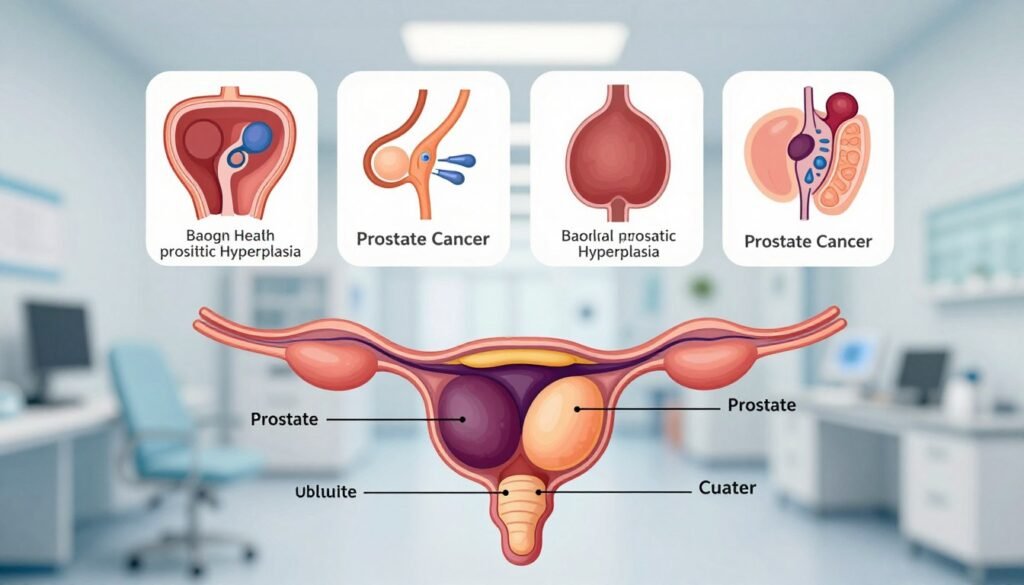
Several conditions can affect this gland. Prostatitis involves inflammation or infection.
BPH is a non-cancerous enlargement common with age. Prostate cancer is a serious disease with many new cases each year.
Statistics show one in eight men will face this cancer diagnosis. Risk factors increase significantly over time.
| Condition | Type | Primary Symptoms | Prevalence |
|---|---|---|---|
| Prostatitis | Inflammation/Infection | Pain, fever, urinary issues | Common across ages |
| BPH (Benign Prostatic Hyperplasia) | Non-cancerous enlargement | Frequent urination, weak stream | Very common in older men |
| Prostate Cancer | Malignant tumor | Often asymptomatic early; advanced cases cause pain, urinary problems | ~313,780 new cases expected in 2025 |
Knowledge of these conditions empowers better personal health decisions. Early detection improves outcomes for many diseases.
is there a health risk at prostate parties in florida
The gap between online rumors and clinical evidence is where real understanding begins. Let’s examine the facts beyond the headlines.
Reviewing Research-Based Evidence
Current medical investigations find no proof of widespread outbreaks tied to these social events. Sensational news lacks support from scientific data.

Evidence-based reviews focus on documented clinical outcomes. They do not indicate a unique public health crisis from these gatherings.
Separating Scientific Facts from Online Myths
Personal anecdotes shared online often generate unnecessary fear. These stories typically omit crucial medical context.
Primary risk factors involve poor hygiene and missing protective measures. The gland is a delicate organ. Most complications stem from incorrect technique, not the social activity itself.
Qualified doctors provide the best information for bodily safety. Consulting professionals ensures you get facts, not fiction.
| Source of Info | Type of Content | Potential for Misinformation | Recommended Action |
|---|---|---|---|
| Social Media & Forums | Anecdotal stories, personal experiences | High – lacks scientific review | Verify with trusted sources |
| Peer-Reviewed Research | Data-driven studies, clinical evidence | Low – rigorously vetted | Use as a foundation for decisions |
| Medical Professionals | Personalized advice, risk assessment | Very Low – expert guidance | Schedule a consultation |
Assessing Physical Risks and Infection Concerns
The delicate nature of rectal tissue presents specific challenges for safe physical interaction. Understanding these vulnerabilities helps you make smarter choices for your bodily safety.
Rough or incorrect technique can harm sensitive internal linings. This damage creates openings for unwanted pathogens.
Tissue Damage, Micro-Tears, and Bleeding
Internal tissue is not as resilient as external skin. Vigorous stimulation may cause tiny tears, even with minor bleeding.
These micro-tears act as direct pathways for bacteria. They significantly raise the chance of a local or systemic infection.
One doctor noted,
“Any breach in the mucosal barrier should be treated with serious concern. It’s an open invitation for complications.”
Risks of Infections and STI Transmission
Bacteria can travel from the rectum into the urethra or prostate gland. This movement may trigger painful prostatitis or broader illness.
Protective barriers like condoms and gloves are non-negotiable. They block the spread of STIs, including chlamydia, gonorrhea, and HIV.
Individuals with pre-existing medical conditions face amplified danger. Extra caution is essential for their long-term wellness.
| Risk Factor | Potential Consequence | Essential Prevention |
|---|---|---|
| Trauma to delicate tissue | Micro-tears, bleeding, localized pain | Gentle technique, proper lubrication |
| Bacterial introduction | Prostatitis, urinary tract or systemic infection | Meticulous hygiene, use of barriers |
| STI exposure | Transmission of chlamydia, gonorrhea, HIV | Consistent condom & glove use |
While large disease outbreaks aren’t linked to these events, personal infection remains a real worry. Your best defense combines knowledge, careful hygiene, and reliable protection.
Expert Guidance: Safe Practices and Preventative Measures
Your physical safety hinges on adopting proven, expert-backed habits. Medical professionals provide clear steps to minimize danger and promote wellness.
Following these protocols helps safeguard your long-term physical condition. Let’s explore the core components of a responsible approach.
Using Protection and Sanitation Products
High-quality barriers form your first line of defense. Items like condoms and gloves are non-negotiable for reducing infection risk.
Proper sanitation of any tools or devices is equally critical. This practice prevents bacterial transfer that could lead to painful complications.
One urologist emphasized,
“Consistent, correct use of protection is the single most effective action participants can take. It’s a simple step with profound impact.”
| Safety Practice | Recommended Tool | Primary Benefit |
|---|---|---|
| Barrier Protection | Condoms, medical-grade gloves | Blocks STI transmission & reduces bacterial spread |
| Device Hygiene | Disinfectant solutions, proper cleaning | Prevents transfer of pathogens between uses |
| Personal Lubrication | Water-based, body-safe lubricants | Minimizes tissue trauma and micro-tears |
Importance of Communication and Regular Testing
Clear dialogue about health status and recent STI results is vital. This transparency ensures a consensual and safer environment for everyone involved.
Research confirms that regular screening is a cornerstone of proactive care. Men should schedule annual check-ups with a urologist to monitor prostate and sexual wellness.
Seeking guidance from a doctor helps you understand personal risk factors. These experts offer tailored information for maintaining your body in optimal condition.
Testing empowers you with knowledge. It transforms uncertainty into a clear plan for your continued well-being.
Florida-Specific Data, Media Attention, and Legal Considerations
Concrete numbers from the Sunshine State offer a clear picture of current medical challenges. Local statistics provide essential context for any discussion on wellness and prevention.
This data helps separate statewide realities from national headlines.
State Statistics on Prostate Cancer Incidence and Mortality
Florida documented 24,090 new prostate cancer cases in 2024. An estimated 2,800 men will die from the disease this year.
Advancing age remains a primary risk factor for these cases. Major institutions are actively working to change these outcomes.
The Mayo Clinic in Jacksonville received a $2 million grant for prostate cancer research. This investment fuels better treatment and prevention strategies.
Legal Perspectives and Public Health Engagements in Florida
No specific laws target the social gatherings mentioned online. General public health codes for safety and communicable disease still apply to all events.
State officials prioritize outreach to educate men on screening choices. Their goal is promoting informed decision-making for personal care.
Florida has secured 77 federal research grants since 1997. This evidence shows a long-term commitment to high-quality medical science.
| Focus Area | Florida Data & Engagement | Key Implication |
|---|---|---|
| Annual Disease Burden | 24,090 new cases; 2,800 deaths (2024) | Highlights critical need for screening and awareness |
| Research Investment | $2M+ grant to Mayo Clinic; $37.7M in total grants | Demonstrates sustained effort to improve outcomes |
| Public Health Strategy | Outreach on risk factors and informed screening | Empowers individuals with knowledge for better choices |
Regular screening and professional guidance are vital. This local data empowers men to take charge of their health.
Conclusion
The journey toward informed personal care begins with separating enduring health principles from fleeting trends.
Over 3.5 million men now live full lives after a prostate cancer diagnosis. This fact proves early detection and modern treatment are highly effective.
An estimated 35,770 deaths from this cancer are projected for 2025. Such numbers underscore why public health work and regular guidance from medical professionals are so crucial.
Speaking with your doctor about personal risk factors and screening choices is essential. Safe practices, informed consent, and rigorous hygiene form the cornerstone of disease prevention.
By focusing on expert-recommended care, men can protect their prostate health for many years.